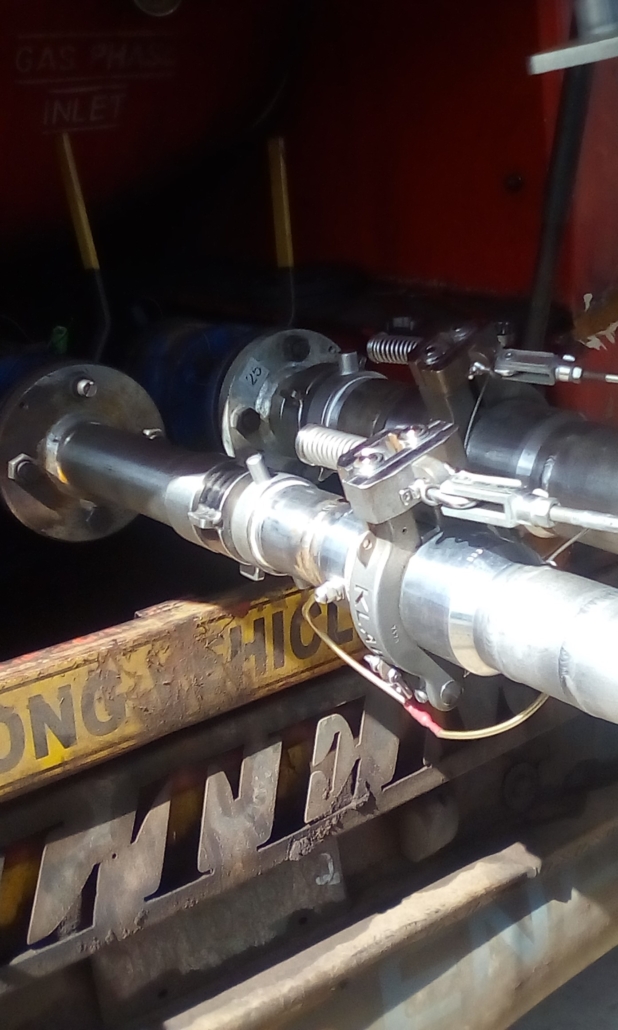
Breakaway Couplings/Emergency Release
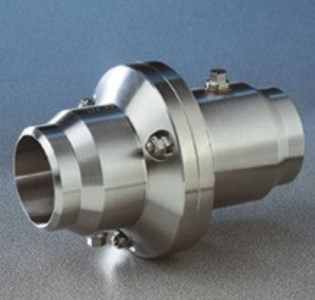
Breakaway Couplings/Emergency Release by Carbis Loadtec is designed to ensure customers transfer bulk liquids to moveable tanks. The Industrial Breakaway Coupling is based on the proven Gall-Thompson ‘Flip-Flap’ design and provides complete shut-off of liquid flow from both sides before the seal integrity is breached.
This feature earns it a Lloyds certificate, making it unique.
Breakaway Couplings/Emergency Release are insurance against spillage and the consequent cost of injury, spillage, and clean-up following an unplanned tanker drive-away while connected to the plant. When fitted to a chemical bottom loading arm, the coupler is usually fitted as close to the tanker connection as possible.
It is best practice to keep spare kits for your Breakaway Couplings/Emergency Release Couplings on the shelf; if you have a breakaway event, you can quickly rebuild the unit and carry on with your processes.
Breakaway Couplings/Emergency Release can be supplied in two types of actuation:
Breakaway Coupling. This actuates when sufficient side load is imposed on three radial break studs on the coupler. Once the first (waisted) stud is stretched, the internal poppets will close before the seal is breached, and then the two halves of the coupler will part. The result is an almost zero displacement of liquid. The key to success in this type of coupler comes from the shear angle being in the optimum range to allow the studs to break cleanly. If it is a direct pull force, the arm could fail first because of positioning.
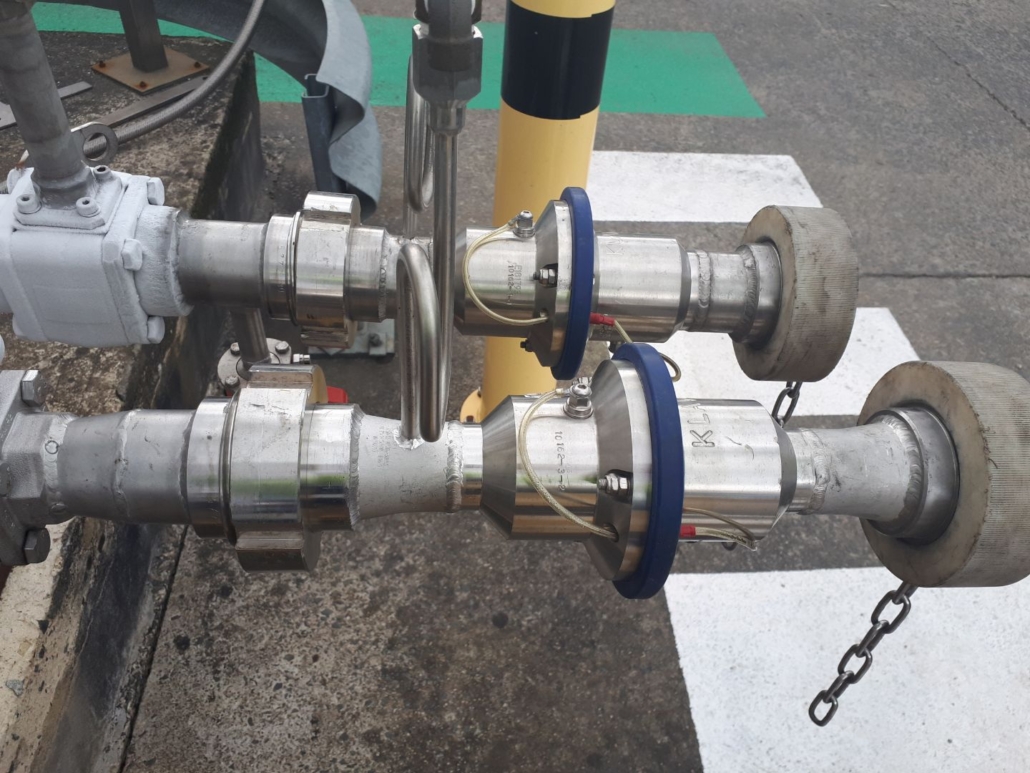
Emergency Release Coupling. It has the same internal design, but the two halves of the coupler are held together by a clamp, which, in turn, is held together by a system with a break pin. The pin is connected to a Bowden cable fixed to a bracket that tracks the rotation of a loading arm swivel. A pre-determined range of movement is set up, and if the arm is pulled outside of that range, the cable will break the pin, and the clamp will open, releasing the two halves and closing the poppets.
The Emergency Release Coupler is a safer option when used on loading arms because the direction of travel and angle have less impact on the desired result.
Unlock the advantages of our safe access and bulk liquid loading systems today!
Contact us at +44 1303 81 30 30, email [email protected], or fill out the contact form on our Contact page.
Take the first step towards safer operations now.